Lamborghini Murcielago Review

Massively powerful, definitively flamboyant and as eyeball-grabbing as an A-list Hollywood celebrity, the Lamborghini Murcielago firmly embodies the spirit and meaning of the word "supercar." Big and brashly styled, it has an undeniable street presence that few other cars can match.
Lamborghini Murcielago


2008 Lamborghini Murcielago Convertible Shown

As Lamborghini's top sports car, the Murcielago carries on the tradition laid down by its V12-powered predecessors, including the Miura, Countach and Diablo. It's not a particularly easy car to drive or, given its approximate $300,000 price, an easy car to obtain. Then again, that's all part of the appeal.

Current Lamborghini Murcielago

In Spanish, Murcielago means "bat," though Lamborghini says the name actually refers to a 19th-century Spanish bull that earned fame through its courageous nature in a bullfight. The supercar comes in two body styles -- coupe or convertible -- and both are powered by the same 6.2-liter V12 engine. Positioned amidships, it's capable of 580 horsepower and 478 pound-feet of torque. The Murcielago LP640, promised for 2007, has even more power. Its 6.5-liter V12 delivers 640 hp and 487 lb-ft of torque.

Feeding and cooling this powerful engine are a variety of scoops and ducts, including two electronically controlled air scoops that automatically raise from the car's rear haunches when needed. Power is sent through an all-wheel-drive system. A six-speed manual transmission is standard, and e-gear -- a paddle-shifted automated-clutch manual gearbox -- is available as an option.

The Lamborghini Murcielago's top speed is in excess of 200 mph. All body panels except the roof and doors are constructed of ultra-lightweight carbon fiber. The suspension features electronic adjustable damping, which can raise the car's front suspension 45 mm to avoid scraping the Murcielago's (normally) low-slung chin on driveways and inclines.

In contrast to the wildly styled exterior, which includes the trademark Lamborghini scissor doors, the Murcielago's interior is an exercise in simplicity. The seats are supportive and comfortable, though difficult to get into. Standard equipment includes air-conditioning, a tilt and telescoping steering wheel, power windows and locks, and an audio system with CD player. Options include a navigation system and a variety of custom accents for the interior, including carbon fiber.

In road tests and reviews, we found the Lamborghini Murcielago drives every bit like the supercar that it is. Its trucklike amble at low revs gives little clue as to the apocalyptic power delivery that awaits. At full throttle, there's a quick surge at 3,000 rpm, which gets more urgent at 4,500 as the exhaust clears its throat. This thrust is followed by the all-wheel-drive system shuttling torque to the rear and the most magnificent feral yowl up to redline. You can feel the accelerative Gs weighting your very fingertips, the scenery exploding through the wide-screen windshield. Handling, though never known as a Murcielago strength due to the car's size and weight, is still quite impressive.

Past Lamborghini Murcielago models

Through its general design and overall purpose, Lamborghini's flagship carries on the tradition set by its predecessors, the Diablo and the Countach. Introduced in 2002, the Murcielago has not undergone many major changes, though there have been a few spin-off models. In 2005, Lamborghini released the Murcielago convertible, which came with a removable hardtop.

Lexus IS 250 Review

If you're shopping for an entry-level luxury sedan with a sporty disposition, you'll undoubtedly come across the compact Lexus IS 250. It's the less expensive companion to the pricier but more powerful IS 350 and it's the most affordable way into the Lexus lineup. Although modestly powered for a premium-brand sport sedan, the IS 250 offers all the other virtues of the current IS series, including precise handling, a top-quality interior and an extensive array of high-tech features.


2008 Lexus IS 250 4dr Sedan

In addition, the Lexus IS 250 actually offers a wider variety of drivetrain configurations than the more potent IS 350. On the standard rear-wheel-drive sedan, the company gives you a choice of a six-speed manual or a six-speed automatic transmission. If you've settled on the automatic, you have the option to order your IS 250 with all-wheel drive.

Choices are many in the highly competitive entry-luxury sedan market, yet the IS 250 is certainly one you should consider. That said, its lack of serious speed will deter hard-core enthusiasts, as will its muted steering feedback. For the general premium car shopper, though, the Lexus IS 250 represents a solid buy, as it offers high levels of luxury and refinement while staying within comfortable range of the $30,000 mark.


Current Lexus IS 250

Lexus sells the IS 250 in a single trim level, with either rear-wheel drive or all-wheel drive. The power source is a 2.5-liter V6 rated for 204 horsepower and 185 pound-feet of torque. The standard equipment list is respectable for this type of car. Naturally, all the requisite safety features are on board, including front-seat side airbags, full-length head curtain airbags and stability control. Major options include adaptive bi-xenon HID headlights, heated/ventilated front seats, a surround-sound Mark Levinson audio system with a CD/DVD changer, a navigation system with a rearview camera, adaptive cruise control and Bluetooth. There's also an X package, which is essentially a sport package that provides bigger wheels, high-performance tires, firmer suspension calibrations, aluminum pedals and a front lip spoiler. Note that you can only get this package on rear-drive IS 250s.

On the move, the Lexus IS 250 is smooth-riding and quiet but a bit light on emotion. Handling is secure and precise, particularly with the X package fitted, but the IS never communicates with its driver the way a BMW 3 Series sedan does. Otherwise, the IS 250's dynamics are certainly on par with the other leading entry-luxury sedans, including the Audi A4 and Infiniti G35.

Acceleration is adequate for a car in this price range, but with 0-60-mph estimates falling around the 8-second mark, we'd hardly call it pulse-quickening. Still, buyers will be impressed by the V6's creamy power delivery and the automatic transmission's quick responses in sport mode. The manual gearbox is a reasonable choice for enthusiast drivers, but it's not as tidy through the gears as top competitors'.

Inside, the leather-lined Lexus IS 250 feels luxurious even in standard spec -- something that can't be said of many entry-level luxury sedans in this price range. Still, consumers wanting that quintessential Lexus experience will need to check off bird's-eye maple trim on the options list. Seat comfort and passenger room are excellent up front, but the backseat offers considerably less legroom than the quarters in the 3 Series and G35. Trunk space is average at 13 cubic feet.


Past Lexus IS 250 Models

Introduced for the 2006 model year, the IS 250 represents the second generation of the Lexus IS series. The first generation, known as the IS 300, was sold from 2001-'05. This car was quicker and more involving to drive than today's IS 250, but it wasn't as roomy, refined or luxurious.

Buyers who put any priority on handling would be wise to zero in on 2007 and later models with the optional X package. Also note that the standard stability and traction control system (known as Vehicle Dynamics Integrated Management, or VDIM) was undefeatable on '06 models.

Lexus IS 350 Review

Most entry-level luxury sedans are a compromise between luxury comforts and performance attributes. The horsepower might be there, but the handling might be on the softer side to accommodate as many different tastes as possible. Lexus, however, provides a clever alternative to this compromise -- the company offers two entry-level sedan models, with the IS line specialized for performance.


2008 Lexus IS 350 4dr Sedan

The Lexus IS 350 (and its lesser-powered sibling, the IS 250) considerably improves on the first-generation IS sport sedan in terms of style and performance. With its potent V6 engine, sharp reflexes, aggressive exterior styling and the latest techno-gadgets, this sedan has no major weaknesses. It's one of our top choices for a luxury sport sedan, though test drives of the most popular vehicles in this segment are wise, as each model provides varying degrees of driver interaction. You'll want to find the one that suits you best.

Current Lexus IS 350

The rear-wheel-drive Lexus IS 350 is available in one body style, a four-door sedan, and with only one engine, a robust 3.5-liter V6 that pumps out 306 horsepower and 277 pound-feet of torque. It pushes the car from zero to 60 in 5.6 seconds, which, by the way, is firmly in sports car territory. The IS 350 comes standard with a six-speed automatic transmission. There is no manual option.

Picking out an IS 350 is pretty simple; there's only one trim level. It's very well equipped and includes 17-inch wheels, leather seats, power front seats, automatic dual-zone climate control, a moonroof and an impressive audio system with a six-CD changer. There's an auxiliary jack for MP3 players, and a Mark Levinson 14-speaker 300-watt 7.1 surround-sound audio system is available individually or as part of an option package that also includes a voice-activated navigation system.

Two other option packages worth considering are the Luxury package, which adds heated seats and HID headlights, and the Sport package, which comes with 18-inch wheels, a sport-tuned suspension and sporty interior details, such as aluminum pedals.

Even without options, the Lexus IS 350 comes with a well-crafted interior. It is attractive and features high-quality materials. The front and rear seats are built more for comfort than support, which sheds some light on the difference between the IS 350 and its more performance-centric German counterparts. Like most small luxury sedans, rear seating isn't very spacious, and the Lexus has less rear legroom than many of its competitors.

In reviews and road tests, our editors found the Lexus IS 350 to be a dynamic sport sedan. As impressive as its quickness is the engine's broad and eager power spread. Handling is sharp, but it's still a Lexus, so the drive is perhaps not quite as thrilling as one might get from a BMW or Infiniti. A precise but numb steering rack and a muted exhaust note further this impression. Still, this attribute could be good news for buyers looking for a sport-oriented luxury sedan that's perfectly suitable for daily commutes.


Past Lexus IS 350 models

The Lexus IS 350, which debuted for the 2006 model year, is still in its first generation. Previously, Lexus offered the IS 300. Available as a four-door sedan or wagon, the IS 300 was known for its outstanding driving dynamics but rather drab cabin. It also wasn't as luxurious, roomy or powerful as the current IS 350, but as an affordable used luxury sport sedan, it's worth a look. It was sold from 2001-'05.

Lotus Elise Review

While two-seat sports cars have become more comfortable, more reliable and safer in recent decades, they have also become rather portly. If you wanted both performance and light weight in one machine, you had to give up that new-car smell and start shopping the classifieds. But all that ended with the introduction of the Lotus Elise roadster to the U.S. market in 2005. It's actually been on sale overseas since '96, but European demand for the vehicle along with stringent U.S. crash standards kept it from crossing the pond until more recently.


2008 Lotus Elise Convertible

Meeting U.S. crash standards required the addition of airbags and other safety features that add weight. But Lotus knew that even sports car fans in this country would have trouble giving up comfort for the sake of extreme performance, so the U.S. Lotus Elise comes standard with air-conditioning, antilock brakes and a CD audio system. But don't look for stability control or power steering on this sports car. Lotus was willing to bend, but not break its "simplificate, then add lightness" rule for American tastes by keeping the U.S. Elise's curb weight under 2,000 pounds. That made it easily the lightest performance car sold in this country.

With so little weight to push around, power requirements are minimal. The Lotus Elise features a Toyota-sourced (and Yamaha-built) 1.8-liter four-cylinder engine. It's the same high-revving mill that's been used in Toyotas such as the Celica GT-S and Corolla XRS, but in this case it's been tuned by Lotus to broaden the power band and bump horsepower to 190. That's more than enough power to slingshot the Elise to 60 mph in under 5 seconds flat.

There's no doubt the Lotus Elise is a special car -- for the money, you simply won't find a more thrilling driving experience. Just be aware that it's also a no-frills, race-oriented machine. Those desiring an exciting roadster that can provide more day-to-day functionality will want to order the Elise's optional Touring Package or check out other more comfortable-riding European and Japanese rivals. If you want even more excitement, consider the Sport Package option.

Current Lotus Elise

The Lotus Elise is a two-seat midengine roadster available in one trim level. The interior is understandably spartan, and the standard air-conditioning can be deleted to save even more weight. Several options packages, such as the Touring Package and Sport Package, offer a bit of customization. To maximize protection, a hardtop roof is available as a stand-alone option.


Power for the Lotus Elise comes from a 1.8-liter four-cylinder engine mated to a six-speed manual transmission. The Toyota-sourced engine benefits from Lotus-designed intake and exhaust components and a tweaked engine controller. The result is a broader power band and an increase in output to 190 hp at 7,800 rpm and 138 pound-feet of torque at 6,800 rpm.

As far as safety equipment, don't expect much more than federally mandated items -- antilock brakes are included and traction control is optional, but neither stability control nor side airbags are offered.

Interior accommodations are pure sports car: Lightly padded composite sport seats provide plenty of support and controls are simple enough to keep your attention on the road. The wide door sills and low steering wheel require some fancy body motions and footwork when entering or exiting the vehicle, however. Naturally, the Elise's cockpit emphasizes driving above all else and there are minimal comfort and storage features for longer road trips.

The non-power steering feels as natural as anything we've ever driven and the 1.8-liter engine is indeed tuned to be very responsive, with plenty of torque. Braking is handled by AP Racing and Brembo calipers with 11.5-inch rotors all around. It all adds up to a car that feels as race-oriented, unfiltered and capable as an Italian exotic, at roughly 1/4th the cost.

Past Lotus Elise models

Lotus introduced the Americanized "111R" version of the Elise in 2005, enabled by a three-year NHTSA exemption as the car had failed to meet U.S. bumper regulations. Changes for 2006 included the option of traction control and a limited-slip differential, lightweight forged alloy wheels and a matte black appearance package. Daytime running lights were made standard, along with LED taillights with integrated reflectors. Inside, the seat padding was upgraded for increased comfort and a new, lighter pedal set was installed to save a few more precious pounds.

Lotus Exige Review

Minimalism is the operative word behind the Lotus Exige, a dedicated sports car that will appeal to extreme enthusiasts (and probably few others). The edgy Exige is compact and built purely for ultra-high-performance driving.


2007 Lotus Exige S Coupe

Unlike other supercars, the Lotus Exige isn't powered by a massive fire-breathing V8, V10 or V12. A high-revving four-cylinder engine is all that's needed to provide extraordinary performance. This is because of the vehicle's lightweight construction. There are few amenities and little sound dampening. Weight-adding safety features are kept to the absolute minimum. As a result, the Exige makes little sense as a daily driver. But as a performance car where Lotus' mantra of "simplificate, then add lightness" is in full effect, the Exige is simply one of the quickest, most dynamic and exciting cars on the road.


Current Lotus Exige

The Lotus Exige and supercharged Exige S are hardtop coupe versions of the company's Elise roadster. When the Exige first arrived in America, it was a pleasant surprise. Britain has a long history of building small, lightweight enthusiast sports cars, but for the last quarter-century very few of them had crossed the Atlantic. The Exige, like many of those Brit performance cars, is uncompromising to such a degree that it doesn't feel legal, even by exotic car standards.

Underneath the dramatic body shell is a car built for no other purpose than to be driven hard and fast. The rear-wheel-drive sports coupe is lightweight and loud. It seats only two. Even the standard air-conditioning system can be deleted to reduce weight.

In fact with the Lotus Exige, it's all about minimizing weight. The body structure is made of aluminum. The trunk is small and there's not much additional storage space. Standard features don't include power controls. And safety features are limited to the absolute minimum, so there are no side airbags or stability control and traction control is optional. Power steering? Forget about it.

Only by purchasing the Touring Pack can you get power windows, full carpeting, sound-deadening material and a decent stereo. For the more hardcore, there is the Sport Pack, which is equipped with Eibach coaxial coil springs, Bilstein monotube dampers, forged aluminum wheels and sticky Yokohama Advan tires.


But the Sport Pack still isn't even the most extreme option. Hardcore weekend racers will definitely want to look at the Exige Track Pack, which includes a fully adjustable suspension system (for those who are mechanically inclined), a limited-slip differential and 16-inch wheels and tires up front.

The Exige is equipped with a Toyota-built, 1.8-liter four-cylinder engine. Placed behind the driver for optimum weight distribution (and maximum cabin volume), the engine puts out 190 horsepower and 138 pound-feet of torque. The Exige S adds a Roots-type supercharger supplying 7.25 psi of boost, which results in ratings of 220 hp and 165 lb-ft of torque. Both models have a close-ratio six-speed manual transmission. Zero-to-60 mph acceleration for both cars happens in fewer than 5 seconds.

In our reviews, we found the Lotus Exige to be the most precise-handling car on the market. It's like a hummingbird on four wheels. It's more of a quick car than a crazy fast car. Since it was designed with the road course in mind, stopping and steering are just as important as acceleration. And while it was built to do everything well, it wasn't built for everyone in mind. The ride is harsh, getting in and out is difficult and outward visibility is extremely poor. But for die-hard enthusiasts, there might not be a more satisfying drive.


Past Lotus Exige models

The Exige arrived in the North American market for 2006. In that first year, only the regular model was available -- the Exige S debuted a year later. An earlier Exige (based on the first-generation Elise) was also built but it was never officially imported.

MINI Cooper Clubman Review

Maxing the Mini: More room, more doors, still cuddly

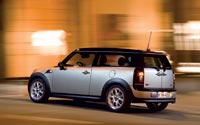
Little distinguishes the new longer, roomier MINI Clubman's driving experience from that of the standard Mini. Which is great news: None of the coupe's quick reflexes, playful nature, or overall Mini-ness is diminished. The differences are all about space: 3.2 inches more wheelbase (which yields an equal bump in rear legroom), 9.6 inches of increased overall length, and a cargo hold that grows from 24.0 to 32.6 cubic feet with the rear seats folded. Plus a few more doors. From the driver's seat, you'll hardly know there's more Mini behind you. But your rear-seat passengers, pets, surfboards, golf clubs, shopping bags, swap-meet treasures, and mall haul will really appreciate the extra room.


The Clubman notion isn't a new idea, but it remains a good one. It's the third body style in the reborn MINI lineup, alongside the second-generation coupe, which came to market early this year, and the convertible, still on the carryover gen-one platform for another year or so.

Mini's design job is clever. The longer roof appears flat at first glance, yet there's a gentle curve to it. Like Clubmans of old, access to the cargo bay is via two hinged "barn doors." Besides the squarer look, the exhaust pipes are no longer centered in the rear valance, instead splitting to the sides in a more conventional, dual-exhaust fashion. A spoiler at the top of the rear deck integrates the center high-mounted stoplight. In keeping with the Mini's USP of allowing the owner a wide variety of color combinations, there are many different ways to spec out the body, bumper, roof, and window-surround finishes.

Joining this club is all about space and access to it, so besides the split rear-cargo doors, there's a rear-hinged, half-door-size access panel on the passenger side that makes back-seat entry and egress a much easier proposition than in the coupe-all the better by which to enjoy the much-needed increased legroom. A squeege over three inches more room may not sound like much, but it's a world of difference in a car this compact. Full-size adults now sit comfortably in back, with plenty of head and knee room for six-footers.

This access door is well integrated into the exterior styling, with the door handle mounted inside so as not to spoil the smooth two-door look. In the name of safety, it can be opened only when the front passenger door is open. The split rear seats fold to create a commodious space for stuff-interesting in that packaging efficiency was one of the aspects that set the original Mini apart from other compact city cars of the 1960s. The centers of the two cargo area doors come together to form a pillar that bisects the driver's view out the rearview mirror, not so different from what the driver of a 1963 "Split Window" Corvette experiences. But the blockage isn't wide enough to hinder rearward vision, and it's something you quickly get used to.


No special structural reinforcement was required to accommodate the increased number of doors and hatches. Overall weight grows by about 175 pounds. Engine, transmission, and equipment levels are otherwise a direct carryover. We spent all our drive time aboard a turbocharged, 172-horsepower Cooper S version and could detect no meaningful decrease in acceleration. The extra ounces will, however, take a bit of sparkle off the naturally aspirated, 118-horsepower base model's straight-line punch. We'll verify this with instrumented testing as soon as we have the opportunity.

Same goes for handling. Overall, the Clubman S feels no different through a smorgasbord of cornering situations from the new Cooper S we just added to our long-term test fleet. One major difference in the Clubman's driving persona is ride comfort. Those three-plus inches of additional wheelbase really smooth out the standard Mini's tendency to hop on bad pavement, over railroad crossings, and the like. It's a dramatic improvement, and one that, combined with all the extra room, makes the Clubman a much happier long-distance car than the short-wheelbase model.

One bane that hasn't been exorcized, at least in the S, is torque steer. Power out of a corner, and the wheel wiggles in your hand. When the turbo boost kicks in, it wiggles worse. Perhaps Mini could have dialed out some of the effect, but steering feel would have diminished because of it. While this problem doesn't kill the Mini's fun factor, it knocks it back a notch or two. There'll never be a rear-drive Mini, but an AWD version might be fun, no?

The car's only other maddening trait, also shared with non-Clubmans, is the HVAC system's too small, too slippery, and just poorly designed fan and heat/cool controls. The tiny, click up-and-down fan switch is slick plastic and practically requires long fingernails to operate. Wearing gloves? Forget it. Why not some large, knurled knobs? And much of the center-stack lettering is too small. These are two instances where function followed form, and Mini ought to get to fixing them. Now.


MINI hasn't yet released the Clubman's pricing structure, but indicates it'll fall midway between the current coupe and convertible models. That translates to about $20,750 for a base Clubman and around $24,000 for a Clubman S, reasonable enough if you fancy the new model's design and extra space.

Besides being a blast to drive, reasonably economical, and a cheeky fashion statement, the Clubman's most significant accomplishment is that its increased passenger comfort and extra cargo room make the Mini a real car for more people. For many buyers, this functionality will more than offset the few extra dollars and the few extra pounds the Clubman packs over the standard models. Mini USA estimates that 15 percent of the cars it sells will be Clubmans. We say it had better be prepared to build more than that.


Maserati Coupe Review

2006 Maserati Coupe Cambiocorsa 2dr Coupe

Practical Exotic Car

The most affordable Maserati has a tight but useable backseat and trunk to complement sexy styling and exhilarating performance.


by Jim Gorzelany and Matthew de Paula

It may not have an imaginative name, but Maserati's Coupé remains an alluring two-door with scintillating performance to match its sensual styling by noted design firm Italdesign-Giugiaro.
2005 Maserati Coup?

As with most exotic cars produced in small numbers, the Coupé hardly changes year to year. For 2006, it gets a larger grille and two-tone interior color schemes. A new limited-edition Vintage package ($4,320) features details meant to evoke classic Maseratis, including light-blue instrument dials in the style of the company's '50s race cars, 19-inch polished wheels, silver brake calipers, aluminum brake and accelerator pedals, chrome mesh front and rear air intakes, chrome exterior door handles and chrome side air outlets.

The four-seat Coupé is Maserati's base model but is anything but basic. Its 4.2-liter V8 uses variable valve timing and electronic drive-by-wire throttle control to generate an impressive 390 hp and 333 pound-feet of torque. It launches the car from zero to 62 mph in 4.9 seconds and on to a staggering top speed of 177 mph.

Estimated fuel economy of 12 to 13 mpg city/18 to 19 mpg highway draws a $3,000 gas-guzzler tax.

There are two trim levels that differ only in their transmissions: the Coupé GT comes with a manual six-speed and the Coupé Cambiocorsa, which adds $4,244 to the car's price, comes with an electronically controlled sequential-manual six-speed that is operated by paddles behind the steering wheel and has a fully automatic mode.

The six-speed manual is the transmission of choice for purists. While the sequential-manual Cambiocorsa gearbox does offer a measure of novelty and flexibility, the automatic mode isn't particularly smooth in operation. This transmission does, however, include a "hill holder" function that automatically engages the brakes for a few seconds on an incline as the driver moves his or her foot from the brake to the gas pedal. Because complex transmissions like Maserati's Cambiocorsa are relatively new in production vehicles (as opposed to race cars, where they've been used for some time), their resilience and reliability remain to be seen.

While even the most aggressive drivers won't be disappointed with the Coupé's firm suspension that enables razor-sharp handling, an optional continuously variable Skyhook suspension ($2,500) improves ride quality and comfort. It has two driver-selectable modes: Sport and Comfort. Eighteen-inch wheels are standard; 19-inch wheels are optional and pricey at $2,480 to $3,775 a set.

Those looking for the ultimate in sporty handling can upgrade to the Maserati GranSport, which is a tweaked version of the Coupé with a lowered suspension, aerodynamic improvements and other minor differences. A convertible version, the GranSport Spyder, is available for sunseekers and sacrifices the Coupé's rear seats for its folding fabric top.

A richly appointed and well-crafted leather interior coddles occupants with supportive power-adjustable sport seats. It blends classic and modern styling beautifully. The driver faces traditional analog gauges, while at the center of the dashboard is a 5.8-inch color video monitor that controls the audio, ventilation and other systems. It can also be used to operate the optional GPS satellite-navigation system ($2,030), hands-free telephone module and CD changer ($725).

The interior is spacious for an exotic sports car. Getting into the backseat can be challenging, but two small to medium-size adults can comfortably fit in the rear for short- trips. The trunk will swallow two golf bags or a custom, five-piece fitted luggage set ($2,500).

Maserati sells only about 2,000 cars annually. For those who feel the Coupé isn’t glamorous or exclusive enough, the company’s Officine Alfieri Maserati program offers limitless customization of interior materials and colors, exterior paint and various other custom-made accessories, such as the fitted luggage.
 

Copyright © 2010 Auto Car Online - Ford - BMW - Mercedes - Lexus - Nissan - Ferrari - Lamborghini - Toyota

Designed by Tony Tran